Sound familiar?Caledon
- The call
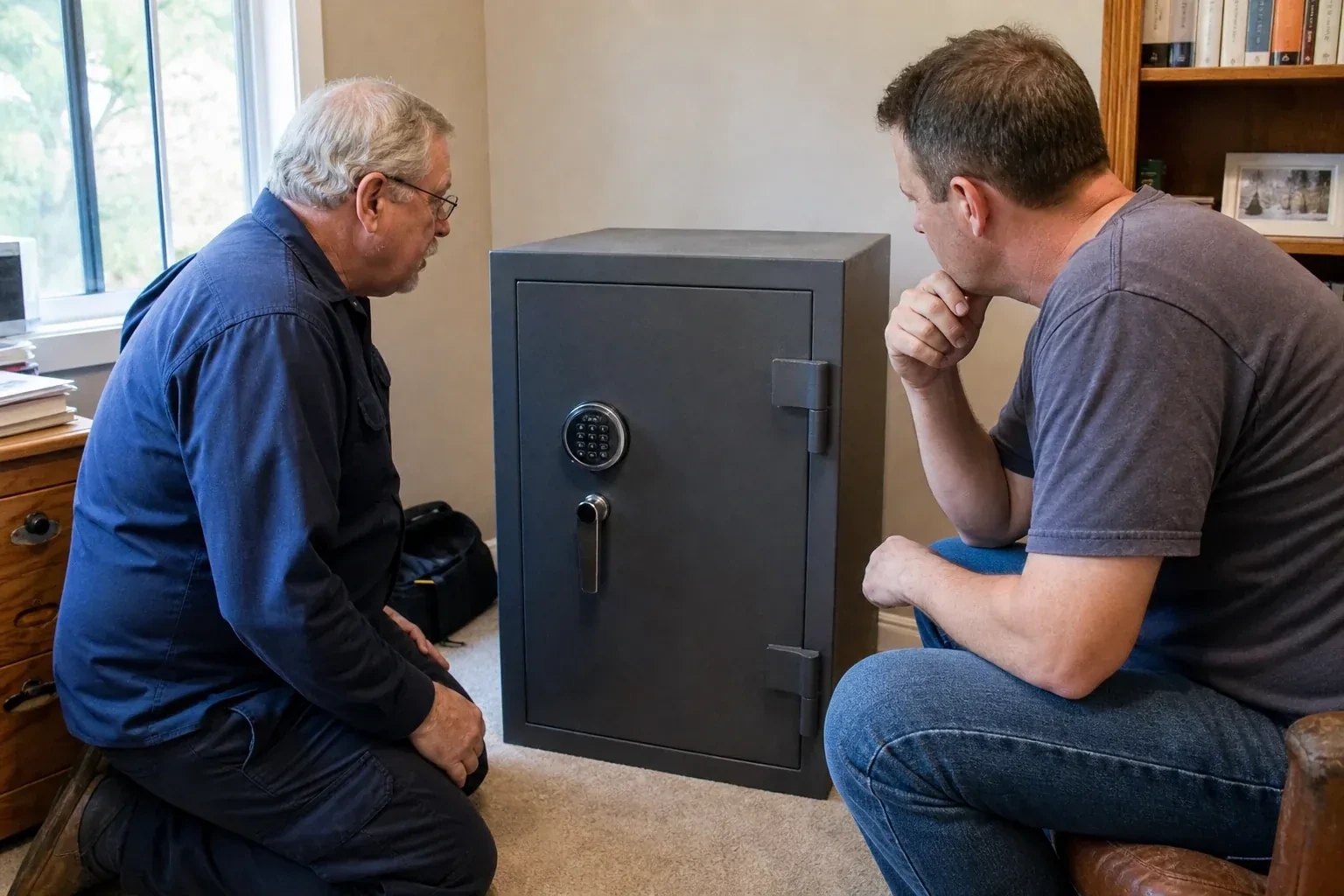
- The accountant's office keeps a decade of client files in cardboard boxes because the only safe in the building is a small drawer safe meant for a laptop, nowhere near large enough for binders of paper.
A dinner service ends with a stack of bills and a handful of credit slips, and right now they sit in an unlocked cash box on a shelf until morning, because nobody has gotten around to anything sturdier.
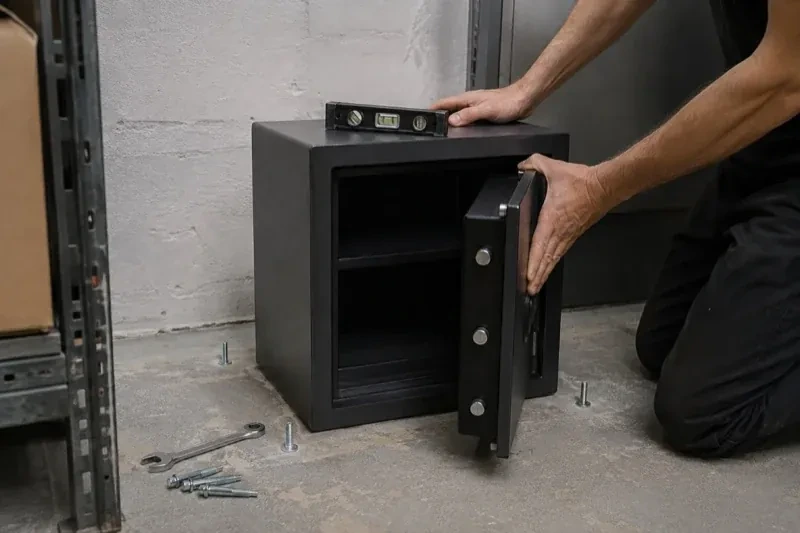
Plenty of visits under this service involve a safe that has been sitting in a back office for years rather than a new one arriving in a box. The locksmith opens the bolt-work, cleans and lubricates the moving parts, tests the lock through several full cycles, and checks whether the anchoring underneath is still solid or was never done at all. Batteries in an electronic lock are swapped before they fail rather than after, and any stiffness in the handle or bolts is traced to rust, dried grease, or a worn part and corrected on the spot.
Sound familiar?Caledon
Safe Installation & Servicing · Caledon
Scene 1
Before any hardware is chosen, the locksmith asks what will actually sit inside: cash from a till, jewelry, firearms, paper contracts, backup drives, or some mix of all of it. Each of those has a different enemy. Cash and jewelry are mainly at risk from tools and time, so a burglary rating matters most. Paper is mainly at risk from heat, so a fire rating matters most, and digital media needs a much lower internal temperature than paper to survive the same fire. Answering this question first is what keeps the rest of the visit from guessing.
Scene 2
The last stage is deliberately unhurried: the lock is opened and closed a final set of times with the owner present, the bolts are checked by hand for any give, and the door is confirmed to swing freely without catching on the frame or the floor. Any paperwork that identifies the model and its ratings is gathered and handed over, along with spare keys for a mechanical override where one exists. The owner sets the combination or code they will actually use, and nobody else leaves the room knowing it.
Scene 3
A safe does not announce when it needs attention the way a squeaky hinge does, so it helps to put a rough date on the calendar rather than waiting for a sign of trouble. Checking the bolt-work, the batteries, and the door seal every year or two catches small stiffness or corrosion long before it becomes a stuck lock. Businesses with heavier daily use, such as a till safe opened many times a shift, generally benefit from a shorter interval between checks than a document safe opened rarely.
What shapes the quoteTamarac Estates Locksmith Specialists
FeesSame any hour
Yes. Bringing your own unit is common, and the installation itself does not depend on where the safe came from. The locksmith still needs to check its weight, its footprint, and its anchor points against the floor or wall it will sit on, and looks over the lock before calling the job complete, since a new-to-you safe occasionally arrives with a stiff mechanism or a combination still set from the factory.
Clearing a working space in front of the safe, moving anything stacked against or on top of it, and having a rough idea of when it was last serviced all help the visit start smoothly. If the combination or code is still known, having it on hand avoids needing to open the unit by other means first. Nothing more elaborate than that is generally needed beforehand.
In most cases, yes. The floor or wall behind it is checked the same way as for a new installation, anchor points on the safe itself are located, and hardware suited to that surface is fitted without needing to move the unit far from where it already sits. An older safe occasionally has anchor holes that were never used, which makes this part of the job simpler than starting from scratch.
PeelOntario
Safe Installation & Servicing · Erin, Tamarac Estates, Alton, Belfountain, Caledon Village, Cataract, Inglewood
Every square is one home in a hundred.
On-site assessment
A dinner service ends with a stack of bills and a handful of credit slips, and right now they sit in an unlocked cash box on a shelf until morning, because nobody has gotten around to anything…
(289) 206-1975, open 24/7.
On-site assessment preferred · (289) 206-1975, open 24/7