Skip to content
TamaracEstates Locksmith SpecialistsOpen 24/7 (289) 206-1975
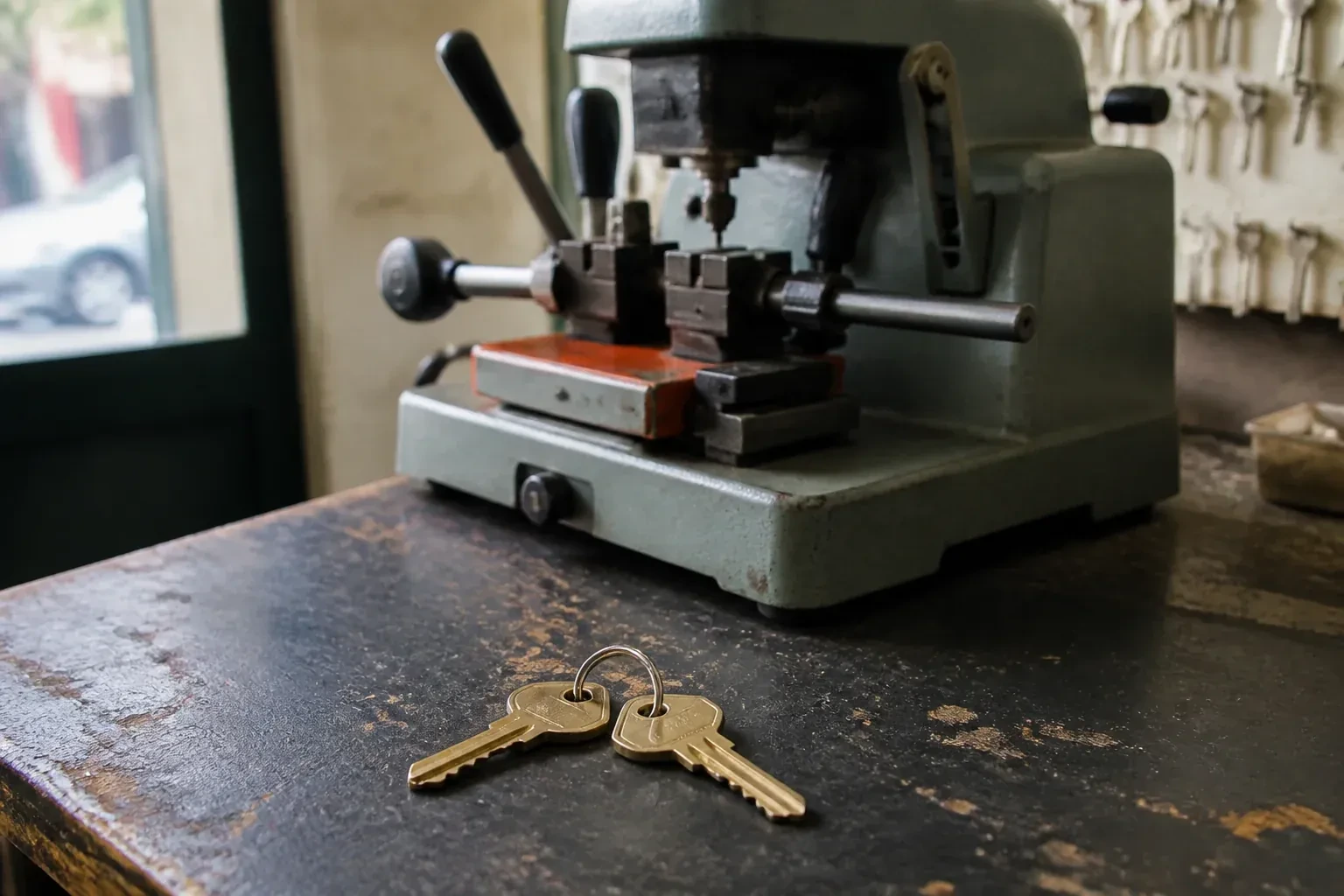
Two brass house keys on a ring resting on a workshop counter. — Spare Car Key Duplication, Tamarac Estates

Car keys · Tamarac Estates

Spare Car Key Duplication

A lockout last month ended with a locksmith opening the door and going home, and the same single key has been carried ever since with nothing behind it. The relief of getting back in faded within a week into the same exposure.

In plain words

A vehicle used by more than one person, such as a shared family car, a small business van or a vehicle looked after by a caretaker, works better with a key for each regular driver rather than one ring changing hands. Spare key duplication from the working original gives every driver an independent, fully tested key: matched blade, matched chip or remote code, and confirmed operation in every door and the ignition before anyone leaves. Keeping a record of how many keys exist and who holds each one also makes accounting for all of them simpler later on.

Sound familiar?Tamarac Estates

The call
Two coworkers share one delivery van and one key between them, trading it at the start and end of every shift in a parking lot. A missed handoff leaves someone standing beside a locked van with nowhere else to be.
NextHow the visit goes

Spare Car Key Duplication · Tamarac Estates

How the visit goes

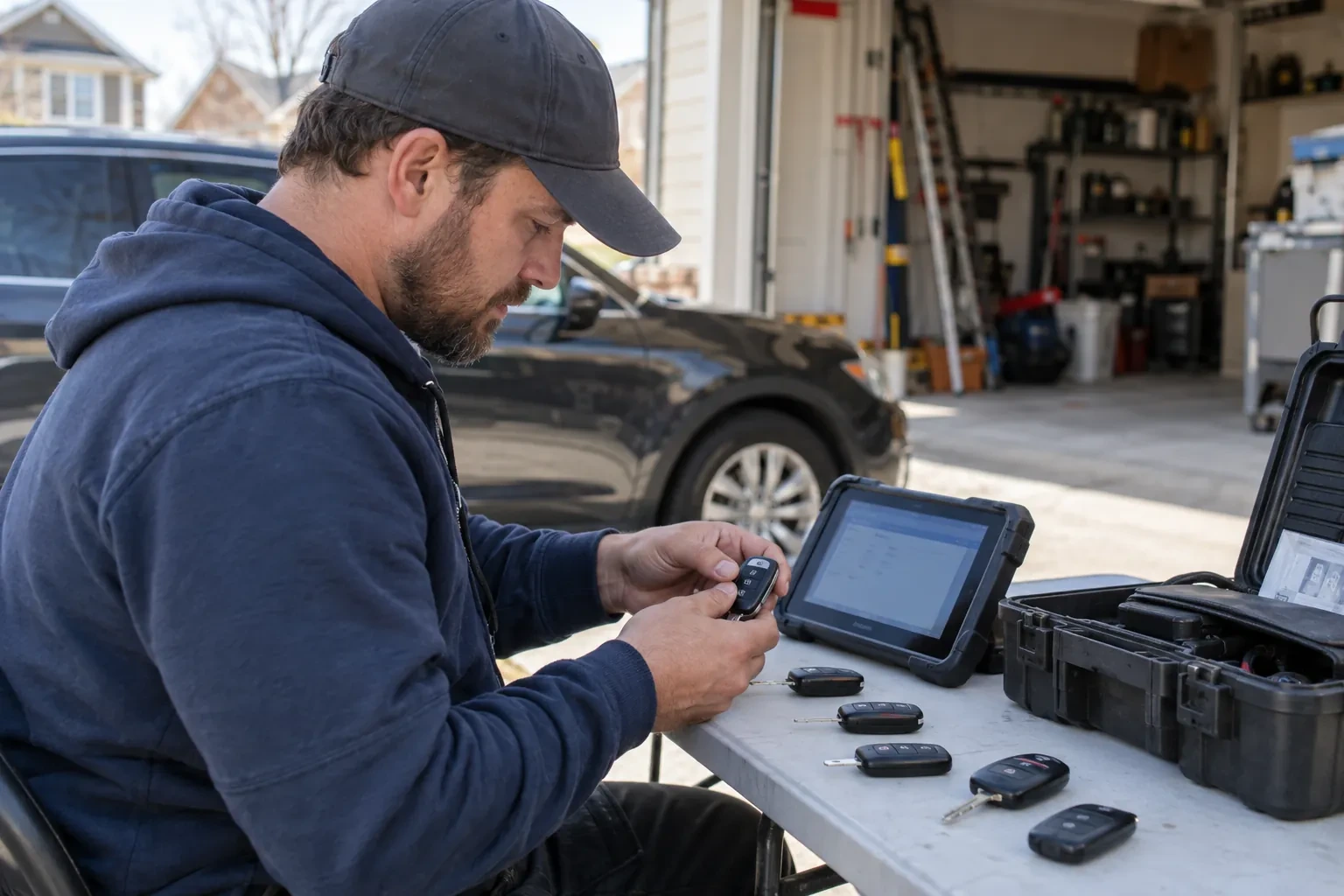
Technician holding a key fob at a folding table with a tablet, loose fobs and a hard case beside a dark SUV. — Tamarac Estates
  1. Scene 1

    Deciding between copying and programming the chip

    Some immobilizer systems allow a new chip to be cloned directly from the working key's own data, which lets a matching second key be produced from the original. Other systems, including some that use rolling codes or added cryptography, call instead for connecting to the vehicle through its diagnostic port and enrolling a freshly coded chip as an additional authorized key rather than a copy of the first. The locksmith identifies which method the specific vehicle and transponder support before starting the work, since the two routes use different tools and take different amounts of time at the vehicle.

  2. Scene 2

    Working from a used or single-key vehicle

    When only one key exists for the vehicle, the whole process leans on that single copy: its blade is traced or measured, its chip is read where the system permits it, and every remote function it performs is noted before work starts, since there is nothing else to check against. The new key is built to match, then tested on its own, away from the original, to confirm it genuinely operates independently rather than only appearing to work while the first key happens to be nearby with its own signal still in range.

  3. Scene 3

    Keeping the household on one system

    If the household runs more than one vehicle or more than one driver, this is a natural point to confirm every key still works the way it should: the original, the new spare, and any older keys already sitting in a drawer. A round of testing the whole set against the vehicle, rather than assuming a key still works because it once did, catches a fob with a fading battery or a blade that has quietly started to wear before it turns into a problem on a morning when someone is already running behind schedule.

In the van

  • Coin-cell fob battery
  • Key blank matched to blade profile
  • Transponder chip
  • VIN and key-system reference
  • Diagnostic port programming interface

What shapes the quoteTamarac Estates Locksmith Specialists

Sourcing the blank or shell
Common platforms use blanks kept in regular stock, while a less common model or an unusual shell sometimes has to be sourced specifically for that vehicle before work can begin.
Condition of the working key
A clean, unworn original traces onto a blank without much fuss, while a thinned or damaged blade may need cutting to a factory code instead, which is a different process with its own materials.
Copying versus diagnostic programming
Some vehicles allow the chip to be copied directly from the original in one step, while others need the locksmith to connect through the diagnostic port and have the vehicle's own module enrol a freshly coded chip, which takes longer at the car.

FeesSame any hour

Have it ready

Before you call · 0 / 3

(289) 206-1975

Short answers to common questions

How should I store the spare once I have it?

Somewhere other than inside the vehicle, since a spare kept in the glovebox solves little if it is the vehicle itself that becomes inaccessible. A bag that travels separately, a drawer at home, or a trusted family member all work. A passive proximity spare also benefits from a signal-blocking pouch during storage, since that kind of fob keeps broadcasting even sitting untouched in a drawer; a standard button-operated remote does not need the same pouch.

Why does the VIN matter for making a spare key?

The VIN identifies the exact immobilizer generation and lock system your particular vehicle left the factory with, which decides whether the chip can be copied directly or needs to be freshly coded through the diagnostic port, and which blank and blade profile are correct. Two cars that look identical from the outside can use different systems a model year apart, so the VIN removes the guesswork.

What if the fob's battery is already low?

A low battery in the original does not stop a spare from being made, since the chip and code stored inside still respond during programming even as the battery fades. It is worth mentioning the low battery when you call, though, since the new fob is a natural moment to have a fresh battery on hand for both keys and to note which type each one takes.

Tamarac Estatesinformation

PeelOntario

Spare Car Key Duplication · Caledon, Erin, Alton, Belfountain, Caledon Village, Cataract, Inglewood

Town
Tamarac Estates, Peel
In business
32 years
Hours
Open 24/7
Nights, weekends and holidays, same fees
Visits
On-site assessment preferred. Request a visit or call.

2021 census: what it means at the door

Every square is one home in a hundred.

  • 30 in 100 homes · newer homes
  • About 30% of homes in Caledon were built in 1980 or earlier, according to the 2021 Census.Builders often key an entire street to a small number of keyways, which is convenient for them and less so for owners afterwards. In newer areas a locksmith can move a household onto a keyway that is genuinely its own.
  • Single-detached houses make up about 81% of homes in Caledon (2021 Census).A house has its own front door and its own frame, with nothing shared. That means the homeowner decides everything: the cylinder grade, the strike, the finish, whether to add a smart lock. The locksmith lays out the options and the household picks.

Source: Statistics Canada, Census Profile

Open Tamarac Estates in Google Maps

On-site assessment

Request a visit.

A lockout last month ended with a locksmith opening the door and going home, and the same single key has been carried ever since with nothing behind it.

(289) 206-1975, open 24/7.