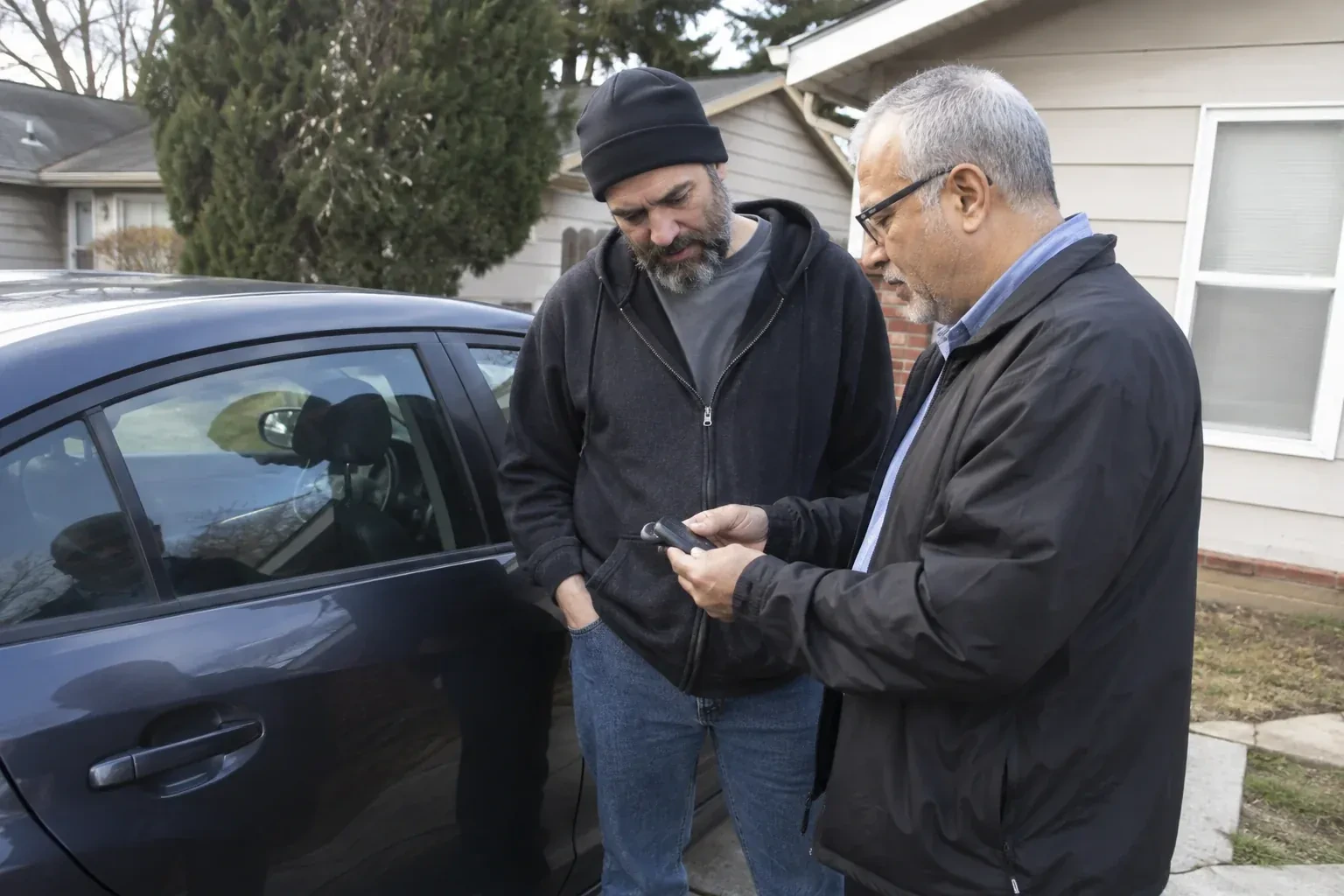
Sound familiar?Cataract
- The call
- You line the key up with the trunk lock, turn it, and feel nothing catch. It spins freely, over and over, never lifting the latch, while every other lock on the car still locks and unlocks the way it always has.
The button on your key fob does nothing now: no beep, no flash of the lights, no click from the doors. The metal blade folded inside the fob still turns the door by hand, so you are getting in and out, just without the remote.
Which lock is affected shapes the whole visit. A door that will not respond to the key usually points to the cylinder or the linkage rod behind it, a trunk or hatch that spins without opening points to a worn or disconnected cam, and a door that ignores the remote but still answers the key points to the power actuator rather than the lock itself. Reading the symptom correctly narrows where to look before the panel comes off, and checks of lock position, fit, cable routing, connectors and the harness follow before the repair settles on the part that failed, rather than replacing hardware that was never the issue.
Sound familiar?Cataract
Vehicle Lock Repair · Cataract
Scene 1
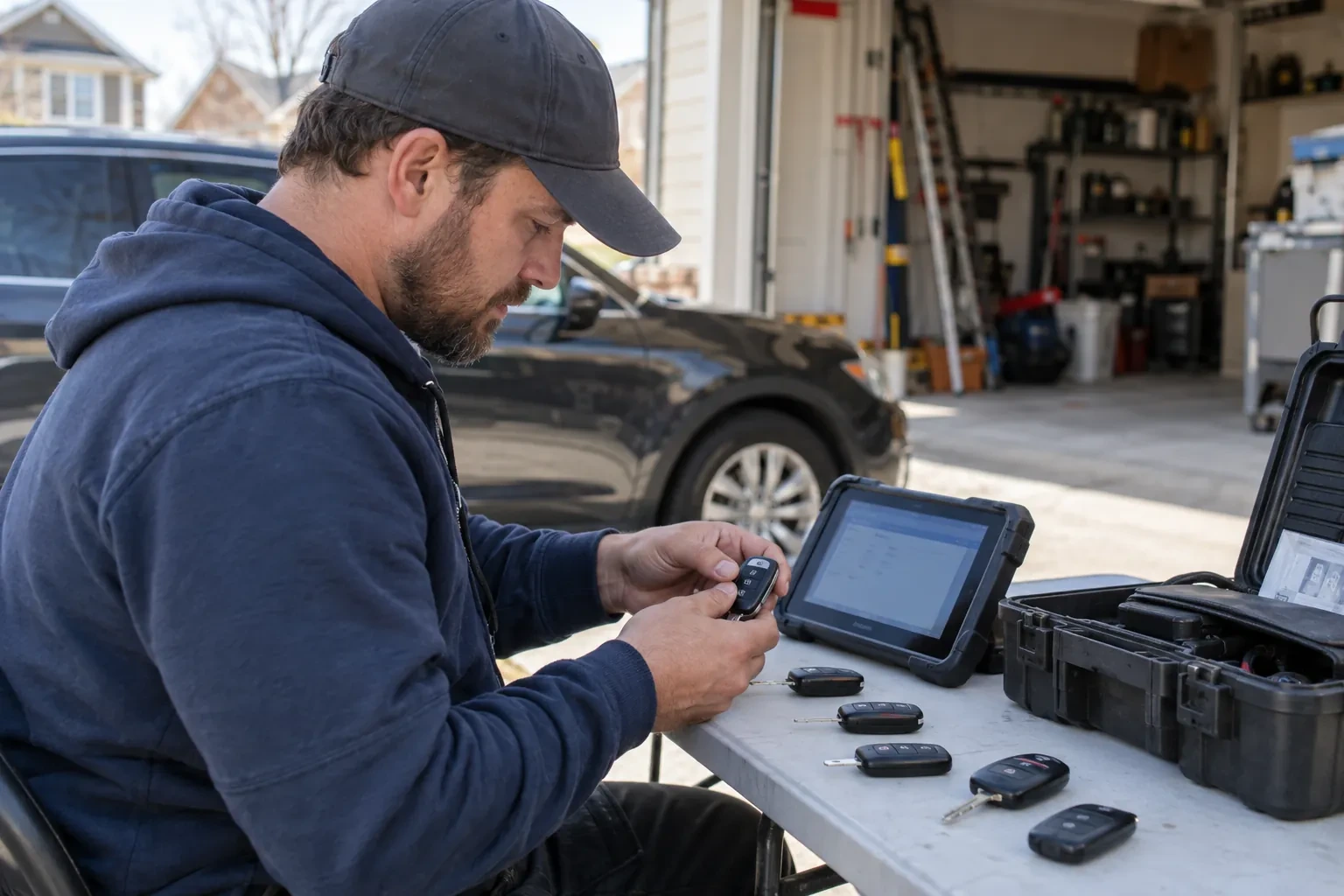
The key itself is part of the diagnosis. A blade that has thinned from years of use, or one cut for a different vehicle years ago and never quite matched, can feel identical to a worn cylinder from the driver's seat. The locksmith checks the key's condition and origin alongside the cylinder's own resistance, since a fresh key cut to the vehicle's code sometimes resolves what first looked like a hardware fault.
Scene 2
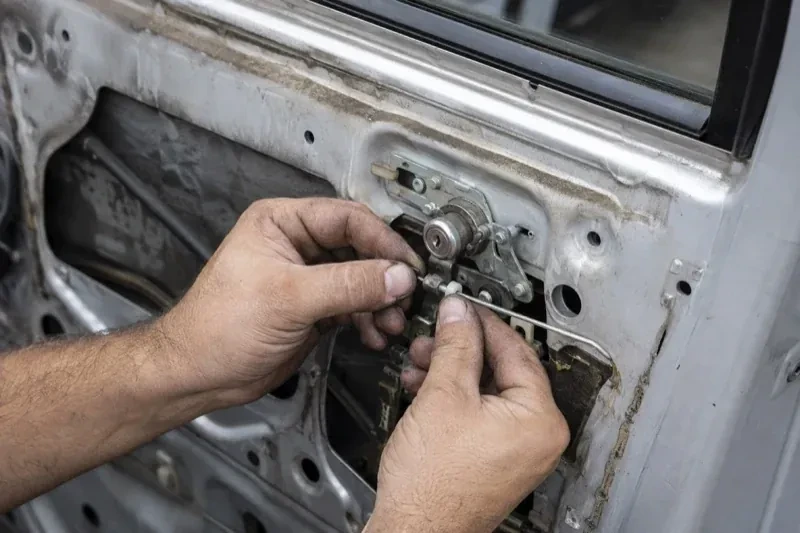
A key that spins without opening the door often means the linkage rod has slipped off the cam at the back of the cylinder or has broken outright, though some cylinders are built to freewheel against the wrong key or a forcing tool, so the locksmith checks which applies first. The locksmith reaches the linkage through the trim panel, reseats or replaces the rod and its clip, and checks that a small amount of free play remains so the mechanism is not binding once the panel goes back on.
Scene 3
Before the visit ends, the locksmith runs the repaired lock through every control it actually has at that location, a key from outside, the interior switch or handle, or the remote, checking that each path locks and releases cleanly. Central locking is cycled a few times with every door watched at once, so a fault that only lagged occasionally is caught rather than assumed fixed after a single try. You see the working lock for yourself before the locksmith packs up.
What shapes the quoteTamarac Estates Locksmith Specialists
FeesSame any hour
Yes. A perished or torn seal around a door or hatch lets rain and winter brine reach the cylinder, the linkage and the wiring behind the panel, and repeated exposure is one of the more common reasons a lock that used to work smoothly starts sticking or failing.
Yes, generally by cutting to the vehicle's factory code or by reading the existing lock cylinder directly. Where the vehicle needs a transponder chip in the key for the engine to start, that chip is fitted and programmed as part of the same visit.
An actuator problem usually means the small motor that moves the lock has worn out, though a switch or control signal in the same assembly can fail too. A wiring problem usually means the motor is fine but current is not reaching it, often traced to a cracked wiring boot at the door hinge or a corroded connector, though the locksmith checks the whole path rather than assuming which it is.
PeelOntario
Vehicle Lock Repair · Caledon, Erin, Tamarac Estates, Alton, Belfountain, Caledon Village, Inglewood
Every square is one home in a hundred.
On-site assessment
The button on your key fob does nothing now: no beep, no flash of the lights, no click from the doors.
(289) 206-1975, open 24/7.
On-site assessment preferred · (289) 206-1975, open 24/7